Friday, February 26, 2016
Century II - Room 101 Pear
For complete information on KMTA's activities, go to www.ksmta.org
SCHEDULE OF EVENTS
9:00 - 9:50 AM
Clinician: Brett Janssen
Teaching Rhythm through Takadimi
10:00 - 10:50 AM
Clinician: Amanda Casper
Music Therapy from a Scientific Standpoint: The Magical Moods of Music
12:30 - 1:20 PM
KMTA - State Honors Recital
1:20 PM
KMTA Honors Reception
 9:00 - 9:50 AM
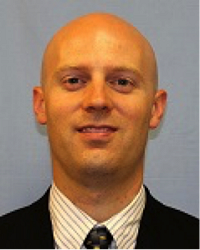
Presenter: Brett Janssen
Teaching Rhythm through Takadimi
This session will explore the theoretical foundation and practical application of using Takadimi to facilitate audiation and develop rhythm literacy within the music lesson to assist the student in giving meaning to music.
Rhythm is an integral component of music and must be considered when lesson planning. Rhythm learning processes are of concern due to past research which has identified rhythm as the most difficult aspect of music reading and a frequent contributor to mistakes when sight-reading music. On the contrary, rhythm reading skills have been found to be the strongest contributor in regards to high sight-reading scores. Students who obtain high sight-reading scores are able to perform a score of music at first sight, while students with a low sight-reading scores might take two or three times to perform.
Rhythm syllable systems are mediators between sound and symbol. They perform the key cognitive function of verbal association and help store aural patterns. The challenge in teaching is selecting which rhythm syllable system will more effectively contribute to student organization and transfer into rhythmic literacy. Takadimi is a rhythm system developed in 1996 that was developed as a pedagogical tool to communicate rhythm understanding to music students of all ages. It answers shortcomings of other rhythm syllable systems.
Theories of music learning provide depth and guidance to pedagogical choices that can guide students in the music lesson towards rhythm literacy. Gagne's learning theory consists of a combination of behavioral and cognitive learning. Pestalozzi's music learning theory consists of sound-before-symbol, where sounds are introduced to create a musical inventory before they are connected with a symbol. Gordon's music learning theory is rooted in audiation, which contributes to music aptitude and music achievement. Audiation consists of translating sound into music, and integrating music that has been heard in the past with music the musician is currently hearing.
Brett Janssen currently serves as Director of Traditional Music at Central Christian College in McPherson, KS. Duties at CCC include teaching Music Theories, Aural Skills, Applied Piano, Piano Ensemble, advisor of the NAFME Collegiate group, and Choral Accompanist. Mr. Janssen has been president of the McPherson Area Piano Teachers League and a member of the KMTA board. He is an adjudicator at area piano festivals and maintains a piano studio of area pre-college students. He holds a B.M. from Wichita State University in Piano Performance and Pedagogy, and a M.A. in Music from University of Missouri-Kansas City. Mr. Janssen is currently pursuing a Ph.D. in Education, Curriculum and Instruction with a music cognate, from Kansas State University with research interests including rhythm syllable systems and their pedagogical implications in the aural skills classroom.
 10:00 - 10:50 AM
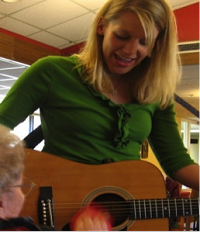
Presenter: Amanda Casper
Music Therapy from a Scientific Standpoint: The Magical Moods of Music
Music is so much more than organized sound. The way music is processed in the brain contributes to the personality, development and memory of each unique individual. Because music is made up of seven basic elements and each is processed in numerous parts of the brain, music therapy is an incredible tool to targeting any individual's goals and objectives. The neurological science behind music therapy shows us that music can target behavioral, physical, cognitive, emotional and social needs for any individual, even those who have no prior musical experience or background. This session will explore how pitch, tempo, rhythm, timbre and other elements of music are neurologically sensed in our bodies and imprinted into our minds. In addition, we will see how higher-order concepts such as harmony, key and meter prove that we are wired for music.
Amanda Casper is a certified neurologic Music Therapist. She graduated with a Bachelor Degree in Music Therapy and Minor in Psychology from the University of Missouri at Kansas City's Conservatory of Music. She completed an internship at a middle school for children with special needs in Rochester, New York and shortly thereafter passed the Board Certification for Music Therapists. Amanda received her credential in Neurologic Music Therapy from the Robert F. Unkefer Academy of Music Therapy in Fort Collins, Colorado, through Colorado State University. She gained a certification in Alzheimer's and Dementia care through the National Council of Certified Dementia Practitioners.
Amanda's experience includes providing music therapy to young and middle school children with developmental disabilities and delays (including speech), autism, mental retardation, cerebral palsy, spina bifida, multiple sclerosis, Rett syndrome, Down syndrome and others. For the past eight years, she has worked at numerous assisted living and health care centers for the elderly, providing group and individual music therapy services for adults in psychiatric, geriatric, palliative and hospice care settings. Her additional experience includes providing acute music therapy for stroke victims with speech inhibitions, piano lessons to children and teaching K-4 music at an elementary school.
Amanda believes strongly in a person-centered approach to treatment in which each individual is given the opportunity to explore, express themselves, apply and enhance personal strengths in order to meet their own objectives through music therapy techniques. She has experienced that the power of music can touch any person in any situation. She has seen proof that music works wonders through the brain, even for those who have no prior musical background or experience.
12:30 - 1:20 PM
KMTA State Honors Recital
This recital will feature solo performances by student winners of the MTNA and KMTA State Honors Auditions held in November of 2015. First-place winners from grades 1 through university level will perform on piano and strings. Following the recital KMTA teachers will host a reception. Students, teachers, family and friends are invited to attend.